SURT (Small Unit Ranger Tactics) is a pre-Ranger course designed to prepare soldiers for the demands of Ranger School. Various units run their own SURT programs — the goal is to screen and train soldiers so they arrive at RAP Week ready to perform on Day 1.
Students rehearse every RAP Week event to standard: land navigation, the RPAT, 5-mile run, 12-mile ruck, water survival, and Ranger stakes. Beyond physical events, SURT covers patrol base operations, battle drills, OPORD writing, and troop leading procedures so students have a foundation for graded patrols in Darby.
Units that invest in strong SURT programs consistently see higher first-time GO rates. The course filters out soldiers who aren't yet ready, saving both the unit and the individual time and resources.
- RPAT preparation — #1 cause of RAP failure
- Land navigation (day & night) — #2 cause of RAP failure
- 5-mile run & 12-mile ruck march to standard
- Combat water survival & confidence swim
- Patrol base operations & battle drills
- 5-paragraph OPORD writing & briefing
- Knot tying, rappelling, and obstacle courses
- Ruck marching under load in varied terrain
- Ranger stakes: demolitions, call for fire, medical tasks
- Lightning Academy SURT — 25th Infantry Division, Schofield Barracks, HI
- RTAC (Ranger Training Assessment Course) — Warrior Training Center, Fort Moore
- Division-level Pre-Ranger programs across the Army
RAP Week is the single biggest filter in Ranger School. More students are dropped during these 4 days than in all other phases combined. If you pass RAP, you have roughly a 75–80% chance of graduating.
All events are pass/fail with no retests. The Ranger Physical Assessment (RPAT), 5-mile run, and land navigation are the top three eliminators. You must also complete the combat water survival assessment, 12-mile ruck march, and demonstrate proficiency on Ranger stakes — task-specific evaluations covering demolitions, call for fire, and medical procedures.
Key stat: The physical assessment is the #1 cause of RAP failure. Land navigation is #2. Train both aggressively before you arrive.
- Day 0: In-processing, equipment draw, orientation
- Day 1: RPAT — push-ups, chin-ups, mobility drills (no retest)
- Day 1: 5-mile run — 40:00 or less
- Day 2: Day land navigation — find 4 of 5 points
- Day 2: Night land navigation — find 3 of 4 points
- Day 3: Combat water survival assessment
- Day 3: 12-mile ruck march — under 3 hours
- Day 4: Ranger stakes — demolitions, call for fire, medical tasks
- Physical Assessment (RPAT + run): ~35% of RAP failures
- Land Navigation: ~25% of RAP failures
- Ruck March: ~15% of RAP failures
- Water Survival / Ranger Stakes / Other: ~25%
Darby Phase is the first graded patrol phase, focused on small unit tactics in the wooded terrain around Fort Moore. Students plan and execute squad-level ambushes, reconnaissance, and raid operations while rotating through graded leadership positions.
This is where Ranger School gets real — severe sleep and food deprivation begin. Students operate on ~2–3 hours of sleep per night and 1–2 MREs per day while burning 5,000+ calories. You must demonstrate the ability to lead a patrol to standard under these conditions.
Students who don't earn at least one GO in a graded leadership position will be recycled (start Darby over) or dropped from the course. Peer evaluations also factor in — bottom performers get a "lack of motivation" (LOM) drop.
- Classroom instruction on squad battle drills & OPORD format
- Darby Queen obstacle course
- Graded squad ambush patrols (day & night)
- Graded squad reconnaissance patrols
- Graded squad raid operations
- Patrol base operations — security, planning, preparation
- Peer evaluations at end of phase
- Field Training Exercise (FTX) — multi-day continuous operations
Mountain Phase takes place at Camp Frank D. Merrill in the north Georgia mountains near Dahlonega. Students learn military mountaineering skills and execute platoon-level combat patrols in steep, heavily wooded terrain with significant elevation changes.
The physical demands escalate dramatically — students carry 80+ lb rucks up and down mountains while continuing to operate on minimal sleep and food. The terrain is unforgiving: movements take 2–3x longer than flat ground, and injuries spike.
Students must earn at least one GO in a graded platoon leadership position (PL, PSG, SL) and pass the knots/rappelling evaluation. The Tennessee Valley Divide FTX is the culminating multi-day field exercise.
- Military mountaineering — rappelling, knots, belaying, rope bridges
- Knot test: square, bowline, round turn w/ two half hitches, transport tightening, water knot
- 60-foot rappel off Yonah Mountain
- Graded platoon ambush & raid patrols in mountain terrain
- Long tactical movements with 80+ lb loads over steep ridges
- River crossing & rope bridge operations
- Tennessee Valley Divide — multi-day FTX, culminating event
- Peer evaluations at end of phase
Swamp Phase is the final phase of Ranger School, conducted at Camp James E. Rudder on Eglin Air Force Base in the Florida panhandle. Students execute platoon-level operations in coastal swamp, jungle, and waterway terrain.
This phase introduces waterborne operations using Zodiac rubber boats, stream and swamp crossings, and patrols through waist-deep water. Students are physically broken down after 40+ days of sleep and food deprivation but must continue to plan and lead combat patrols to standard.
Swamp Phase is also the last chance to earn GOs. Students need an overall GO rate of at least 50% across all phases to graduate. Those who don't meet the standard may be recycled to the beginning of Florida Phase or dropped entirely.
- Watercraft training — Zodiac boat operations, paddling techniques
- Waterborne platoon raids via Zodiac insertion
- Stream & swamp crossings through chest-deep water
- Graded platoon ambush & raid patrols in jungle/swamp
- 10-day field training exercise (FTX) — continuous operations
- Airborne operation for jump-qualified students
- Peer evaluations — final round
- Graduation — earn the Ranger Tab
- Alligators, water moccasins, wild boar
- Dense mosquitoes, sand fleas, fire ants
- Summer: extreme heat & humidity (heat injuries common)
- Winter: hypothermia risk from cold water immersion
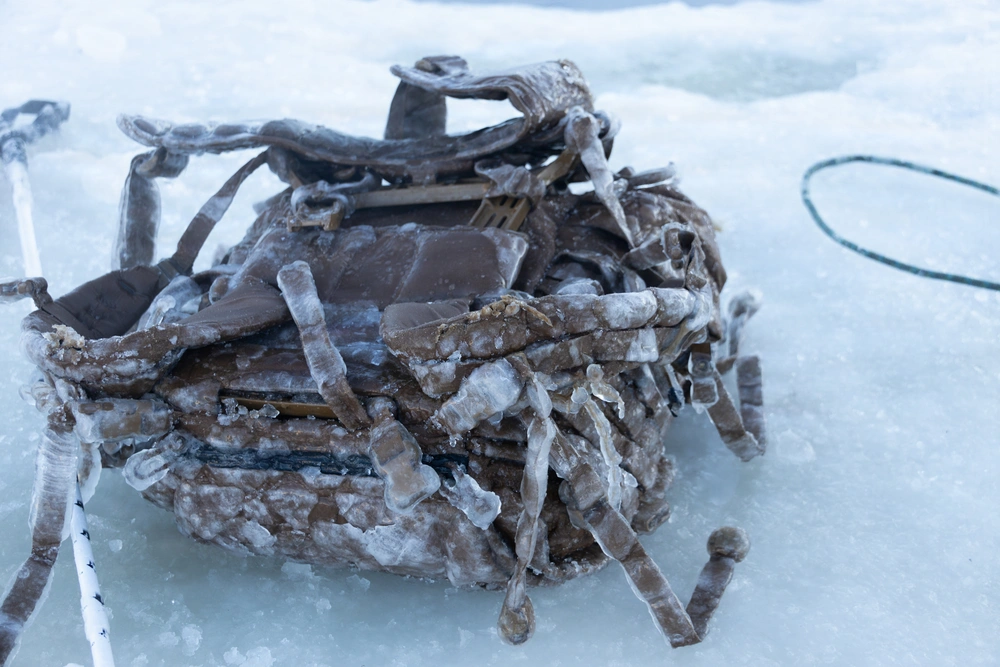
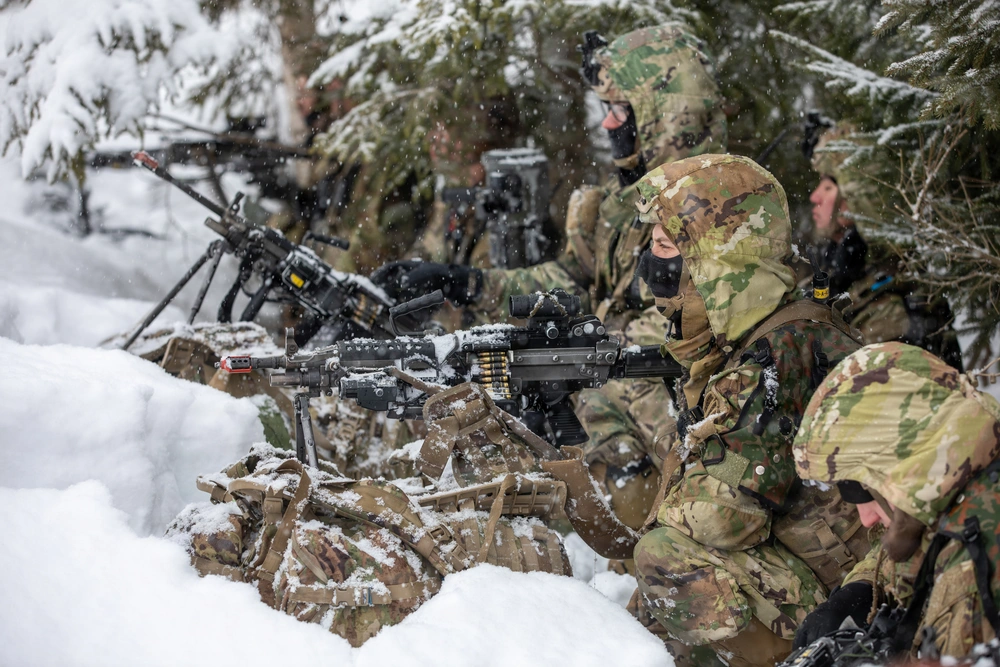
Cold weather demands cold weather gear. Mountain phase in the winter will test your limits — waffle layers, beanies, and glove inserts aren't optional. Frostbite, hypothermia, and frozen equipment are real threats.
Your ruck will freeze overnight. Water sources freeze. Your hands stop working. Sleep deprivation hits harder when your body is burning calories just to stay warm. Winter Rangers earn their tab in some of the harshest conditions the course offers.
- Waffle top & bottom (insulation layers)
- Black beanie & neck gaiter
- Tactical gloves + glove inserts
- Hand warmers (10+ pack)
- Wool socks (3+ pair, rotate daily)
- Sleeping mat / pad — critical for ground insulation
- Poncho liner (woobie) — your lifeline
- Lip balm & skin protection
- Never let your socks stay wet — change at every opportunity
- Keep batteries warm in your pocket (cold kills battery life)
- Eat everything you're given — calories = warmth
- Layer management: sweat is the enemy, vent before you overheat
- Keep your water source insulated or it will freeze solid
Florida phase in the spring means relentless bugs and wet conditions. 100% DEET, permethrin-treated gear, and waterproof everything keeps you in the fight. Bug bites get infected fast when you're sleep-deprived and living in standing water.
Spring classes deal with wildly variable weather — cold mornings in the mountains, hot humid afternoons in Florida. You need gear that handles both extremes. Rain is constant and everything stays wet.
- Bug spray (100% DEET) — bring extra
- Permethrin-treated uniforms
- Head bug net
- Wet weather bags for everything
- Waterproof spray for gear
- Extra foot powder — wet feet = blisters = infections
- Quick-dry undergarments
Summer is the most physically punishing season. Heat casualties are the biggest threat — the combination of 100°F+ temperatures, full combat load, sleep deprivation, and caloric deficit creates dangerous conditions every single day.
Hydration is everything. You'll drink more water than you thought possible and still feel dehydrated. The Florida swamp phase in summer heat is brutal — standing in chest-deep warm water with no breeze while wearing full kit.
- Bug spray (100% DEET) + permethrin
- Sunscreen (SPF 50+)
- Extra canteens / hydration bladder
- Quick-dry everything
- Anti-chafe cream / body glide
- Foot powder — double what you think you need
- Drink water before you're thirsty — by the time you feel it, you're already behind
- Wet your patrol cap and neck to cool down
- Eat salt with your MREs
- Report heat symptoms early — heat stroke can kill
- Roll sleeves when RIs allow it
Fall is widely considered the "best" season for Ranger School — if such a thing exists. Temperatures are moderate, bugs are tapering off, and you avoid the extremes of summer heat and winter cold. But don't get complacent.
The mountains in October and November can get cold fast, especially at elevation. Temperature swings are the main challenge — warm during the day, near-freezing at night. You still need cold weather layers for mountains and light layers for Florida.
- Light cold weather layers (waffle top for mountains)
- Beanie & gloves (mountain phase gets cold at night)
- Bug spray — still needed in Florida
- Poncho liner (woobie) — your best friend
- Standard warm/cool weather versatile kit
- No extreme heat or extreme cold
- Bug pressure drops significantly by October
- Swamp phase water temperatures are bearable
- Mountain phase is cool but manageable
- Historically higher graduation rates (more moderate conditions)